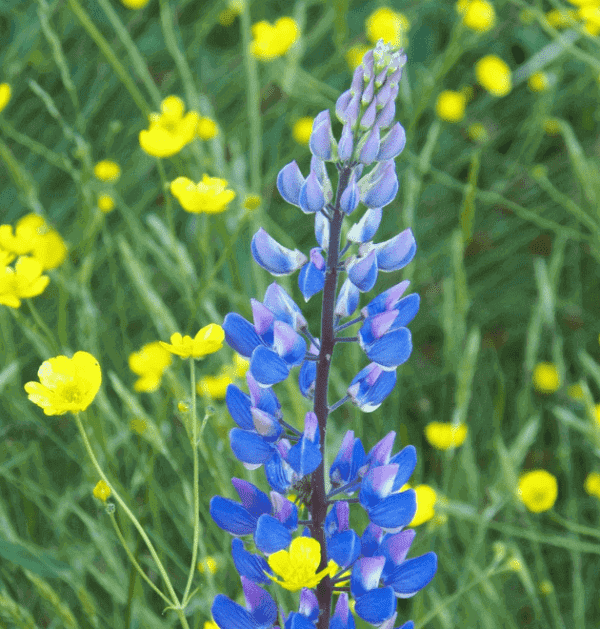
Blue lupine Seeds: Lupinus angustifolius

Price range: €2.99 through €34.99

  • Nutritional Value: Rich in protein (34–43%), high in fiber, and low in starch
  • Health-Friendly: Naturally gluten-free with a low glycemic index
  • Micronutrients: Contains iron, zinc, copper, calcium & phosphorus
  • Versatile Application: Used in animal feed, green manure & human food products
  • Soybean Alternative: Suitable substitute for soy, especially for those with allergies
SKU: AT-4000 Category:

Blue lupine Seeds

Blue lupine seeds, Lupinus angustifolius when sown, will grow into tall, blue-flowered plants, reaching heights of 20-150 cm. They are a hardy annual legume, often cultivated as a winter crop in Mediterranean climates or a summer crop in temperate regions. Blue lupines are known for their deeply taprooted nature, with roots potentially reaching 2.5 meters. 

Product Description: Lupinus angustifolius

These blue lupine seeds are perfect for adding a splash of vibrant blue to your garden. They produce tall, striking flower spikes that are attractive to hummingbirds and butterflies. The seeds are packaged in a compostable bag and are vegan, non-GMO, and free from harmful chemicals. 

Sowing Calendar:

  • Mediterranean Environments: Sow in autumn, from mid-April to mid-May in dry, sandy soils, and somewhat later on loamy soils.
  • Temperate Regions: Sow in spring.
  • Indoors: Sow seeds in seed trays from March to May.
  • Direct Sowing: Sow seeds directly into the ground from August to September of the previous year.
  • Spring Planting: In many regions, spring planting is recommended, with seeds sown in mid-March to mid-April into a warm, moist seedbed.
  • Autumn Planting: In Mediterranean environments or dry, sandy soils, autumn sowing is common, typically from mid-April to mid-May.
  • Avoid Late Sowing: In the northern grain belt of Australia, it’s not recommended to sow lupins after the first week of June

Key Features: Blue Lupine

  • Striking blue flowers: The flowers are a vibrant blue and create a stunning display in the garden.
  • Deeply taprooted: The plant has a deep taproot that can reach 2.5 meters, making it drought-tolerant.
  • Hardy annual legume: It is a hardy plant that can be grown in various conditions.
  • Attracts pollinators: Blue lupines attract hummingbirds and butterflies.
  • Erosion control: They can be used to help control erosion on slopes.
  • Compostable packaging: The seeds are packaged in a sustainable, compostable bag.

Growing Details: Lupinus angustifolius Seeds

  • Sunlight: Blue lupines prefer full sun to part shade.
  • Soil: They thrive in well-drained, loose, or sandy soil, and can tolerate acidic soil conditions.
  • Watering: They have low water requirements.
  • Planting: Sow seeds ¼ to ½ inch deep and ensure good soil contact.
  • Spacing: Smaller varieties should be spaced about 1 foot apart, and larger varieties 2-3 feet apart.
  • Fertilizing: Avoid fertilizing, but an acidifying agent may be needed to maintain slightly acidic soil.
  • Support: Taller varieties may need staking.
  • Deadheading: Cut off faded flowers to promote more blooms.
  • Seed saving: Harvest seeds when pods turn yellow and seeds rattle inside.
  • Mulching: Mulch around the plants in autumn or spring to retain moisture.
Weight

10 g, 20 g, 50 g, 100 g, 200 g, 250 g, 500 g, 1 kg, 2 kg, 5 kg, 10 kg

Reviews

There are no reviews yet.

Be the first to review “Blue lupine Seeds: Lupinus angustifolius”